Freya Frank · 25 September 2026
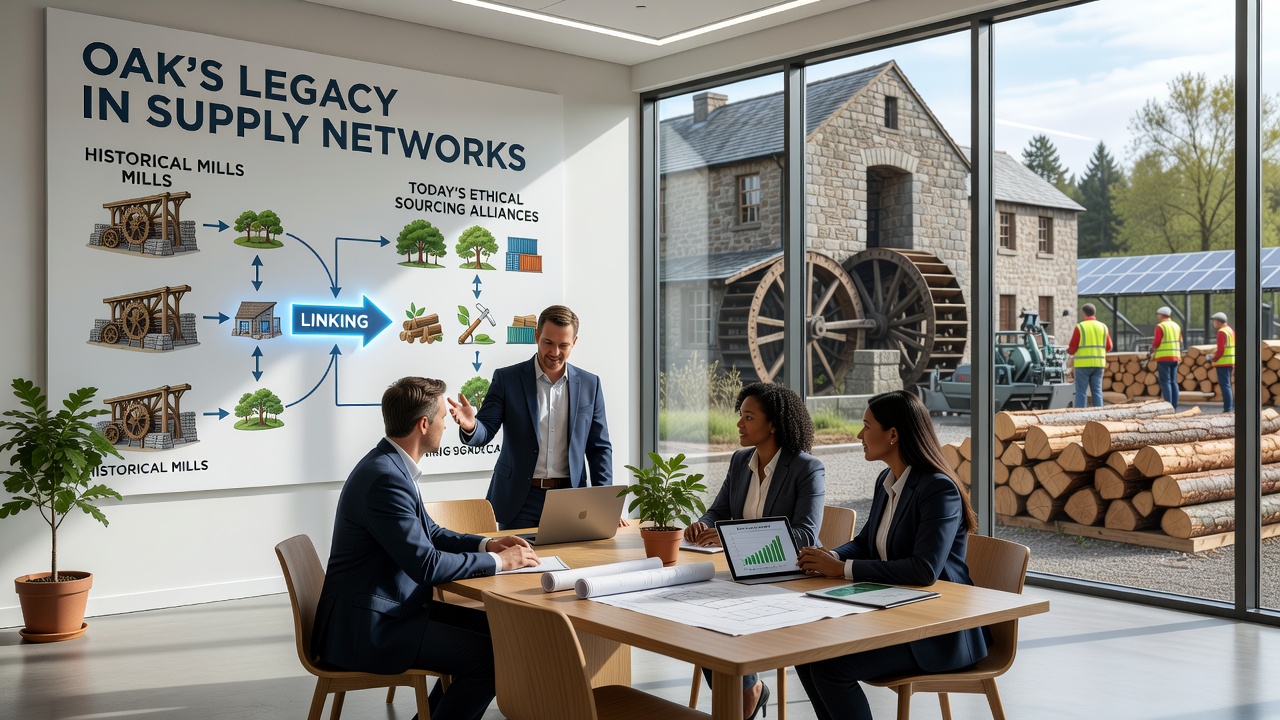
Oak's Legacy in Supply Networks: Linking Historical Mills to Today's Ethical Sourcing Alliances
Water-powered oak mills once formed the backbone of regional economies across North America and Europe, grinding timber into usable boards while relying on local forests for steady raw material, and these early operations established supply patterns that still influence contemporary networks because they prioritized proximity and consistent quality over distant imports. Observers note that many such mills operated from the 1700s through the early 1900s, processing white and red oak varieties that grew abundantly in mixed hardwood stands, and they supplied builders, shipwrights, and furniture makers who demanded durable material resistant to decay and wear.
Historical Foundations of Oak Supply Chains
Researchers have documented how these mills integrated with surrounding communities through seasonal harvesting schedules that aligned with river flows for log transport, creating early versions of vertical supply integration where forest owners, mill operators, and end users coordinated deliveries without intermediaries. Data from archival records shows that by the mid-1800s, certain Pennsylvania and Ohio mills processed thousands of board feet annually, while similar facilities in the UK and Germany followed comparable models tied to crown or state woodlands. This localized approach minimized waste because operators reused sawdust for fuel and sold bark residues to tanneries, yet it also locked regions into oak dependency that later required broader alliances once old-growth stands declined.
Turns out the transition away from water power began in the 1920s when steam and electric mills gained traction, allowing operators to locate facilities closer to rail lines rather than rivers, and this shift expanded sourcing radii from a few dozen miles to several hundred. Figures from forestry inventories indicate that oak harvest volumes in the eastern United States peaked around 1925 before dropping due to farmland conversion and early conservation efforts, prompting mill owners to seek partnerships across state lines. Those who've studied this period know that the first formal sourcing cooperatives emerged in the 1930s, when groups of mill operators pooled resources to purchase timber from distant private lands under shared grading standards.
Modern Ethical Sourcing Alliances
Today's alliances build directly on those precedents by incorporating third-party verification systems that track oak from forest to finished product, and organizations such as the Sustainable Forestry Initiative have reported that certified oak volumes grew steadily through the 2010s as builders and manufacturers demanded proof of legal harvest and biodiversity protection. In September 2026 the North American Hardwood Alliance announced expanded membership criteria requiring members to document chain-of-custody from certified stands, a move that aligns older mill sites with current traceability platforms used by European importers. What's interesting is how these alliances now connect historical mill locations in Appalachia with processing facilities in Scandinavia and Japan, creating multi-continental routes that still honor the durability traits first valued centuries ago.
Evidence from trade statistics reveals that ethical sourcing protocols have reduced documented cases of illegal oak shipments entering major markets since 2018, when the US Lacey Act amendments and the EU Timber Regulation began requiring due diligence declarations from importers. One study revealed that mills adopting blockchain-based tracking systems cut verification costs by approximately 18 percent compared with paper-based methods, while maintaining the same quality thresholds that historical operators enforced through visual inspection alone. People who've examined supply maps notice that former water-mill sites in Vermont and New Hampshire now host collection points for alliance members, where logs arrive with digital tags linking back to specific forest management units.

Regional Variations and Data Trends
Canadian provinces have contributed to these networks through provincial crown land leasing programs that mandate reforestation ratios, and reports from Natural Resources Canada show oak plantings increasing in southern Ontario and Quebec since 2020 to meet projected demand from alliance partners. Meanwhile Australian suppliers have joined select partnerships focusing on plantation-grown oak hybrids, which reach harvest size faster than native North American species while meeting the same structural grading rules used by legacy mills. Researchers discovered that combining these regional inputs allows manufacturers to stabilize pricing during weather-related disruptions, because contracts within the alliances include volume guarantees tied to audited forest inventories rather than spot-market fluctuations.
Observers note that university extension programs in multiple states now train mill operators on the documentation requirements of ethical alliances, covering topics from GPS-mapped harvest boundaries to carbon accounting that some members voluntarily add to their reports. Data indicates that facilities participating in these programs report higher retention of skilled workers because the work involves technology integration alongside traditional sawing techniques. And yet the core metric remains unchanged from historical times: consistent oak quality measured by ring density and defect rates that determine suitability for flooring, cabinetry, and structural beams.
Conclusion
Alliances active in 2026 continue to reference the operational logic first developed at water-powered oak mills, adapting those principles to global traceability standards and verified sustainability metrics. Government agencies across North America and the European Union publish annual summaries of certified volumes, providing the factual baseline that alliance members use when negotiating long-term supply agreements. The result is a supply network that preserves the legacy of localized, quality-focused processing while meeting contemporary requirements for documented ethical sourcing.