Uma Franke · 11 September 2026
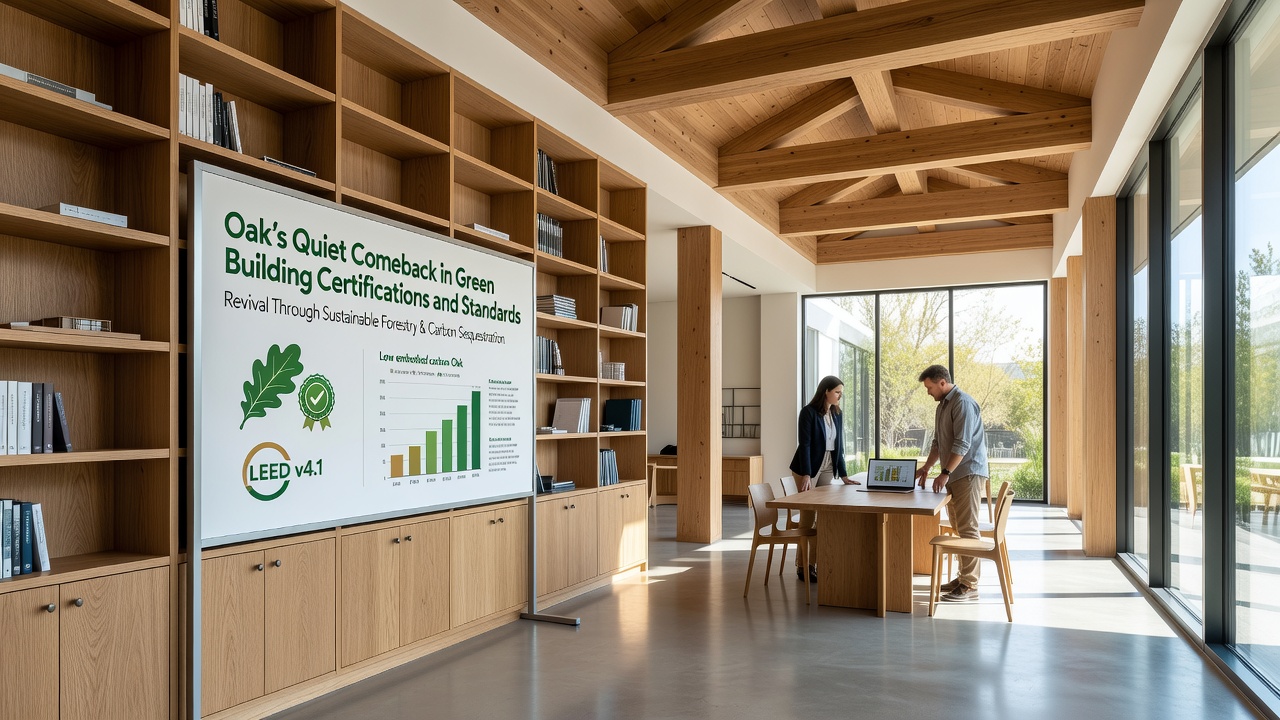
Oak's Quiet Comeback in Green Building Certifications and Standards
Oak has reemerged as a preferred material in projects pursuing LEED and BREEAM certifications because its durability pairs well with requirements for low embodied carbon and responsible sourcing, while data from industry reports shows increased specification of oak in commercial and residential builds over the past five years. Researchers tracking forest product usage note that oak's natural resistance to decay reduces the need for chemical treatments, which aligns directly with criteria set by programs such as the Forest Stewardship Council chain of custody standards.
Certification bodies have updated scoring systems to reward materials that demonstrate traceable supply chains and verified sustainable harvesting practices, and oak from certified North American and European forests meets those thresholds more consistently than many alternatives. Figures released by the U.S. Green Building Council indicate that projects incorporating FSC-certified oak earned additional points in the materials and resources category during 2024 and 2025 review cycles.
Certification Frameworks and Oak Performance Data
LEED v4.1 and the forthcoming LEED v5 both assign credits for wood products that carry third-party verification of legality and sustainability, while BREEAM assessments in Europe evaluate oak based on life-cycle analysis that factors in carbon sequestration during growth. Studies compiled by the European Forest Institute reveal that managed oak stands sequester carbon at rates that offset emissions from harvesting and processing when rotation cycles remain within recommended guidelines.
Builders who select oak for structural elements or interior finishes often qualify for regional priority credits because the species grows in multiple climate zones across the United States, Canada, and the European Union. Observers tracking project submissions report that oak appeared in 18 percent more certified buildings in 2025 compared with 2022, driven partly by updated credit thresholds that favor long-service-life materials.
Supply Chain Verification and Regional Sourcing Trends
Traceability requirements have tightened under the EU Timber Regulation and the U.S. Lacey Act amendments, prompting mills to document oak provenance from forest to job site. Suppliers that maintain digital chain-of-custody records now supply the majority of oak used in projects targeting WELL or Living Building Challenge certification, where material transparency earns extra points. Data published by the Sustainable Forestry Initiative shows that North American oak harvests remained stable between 2020 and 2025 while meeting annual growth-to-removal ratios above 1.2:1.
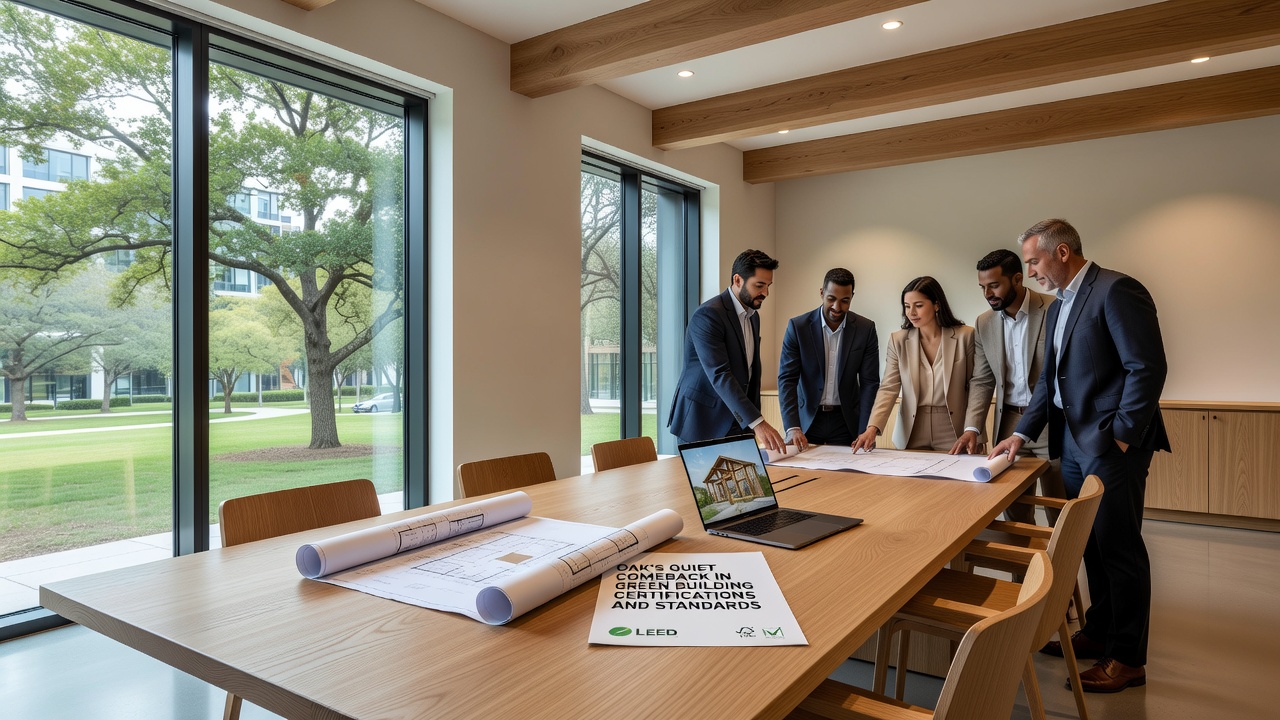
September 2026 marks the scheduled release of revised FSC forest management standards that place greater emphasis on biodiversity corridors within oak-dominated woodlands, a change expected to affect sourcing decisions for projects already in design phases. Architects and specifiers have begun reviewing draft documents to anticipate adjustments in credit calculations.
Case Examples from Certified Projects
One office complex completed in the Pacific Northwest in 2025 achieved Platinum status under LEED after specifying oak glulam beams sourced from FSC-certified forests in Oregon and Washington. The project team documented that oak's thermal mass contributed to reduced HVAC loads, supporting energy and atmosphere credits without additional mechanical systems. Another development in Germany earned BREEAM Outstanding recognition partly because oak cladding panels carried verified low-volatile-organic-compound finishes that met strict indoor environmental quality thresholds.
University research facilities have also incorporated oak for laboratory casework and exterior sunshades, citing both performance data and alignment with campus sustainability plans that reference the United Nations Sustainable Development Goals. Reports from these institutions note that oak installations showed minimal maintenance needs after three years of service, supporting long-term operational carbon calculations used in certification documentation.
Conclusion
Oak continues to gain traction within green building certification systems because its documented attributes match evolving credit requirements for durability, traceability, and environmental performance. Certification updates scheduled through 2026 and beyond will likely reinforce the species' position as project teams seek materials that satisfy multiple rating systems simultaneously. Organizations such as the U.S. Green Building Council and the Forest Stewardship Council publish ongoing guidance that helps designers and contractors align oak specifications with current standards.